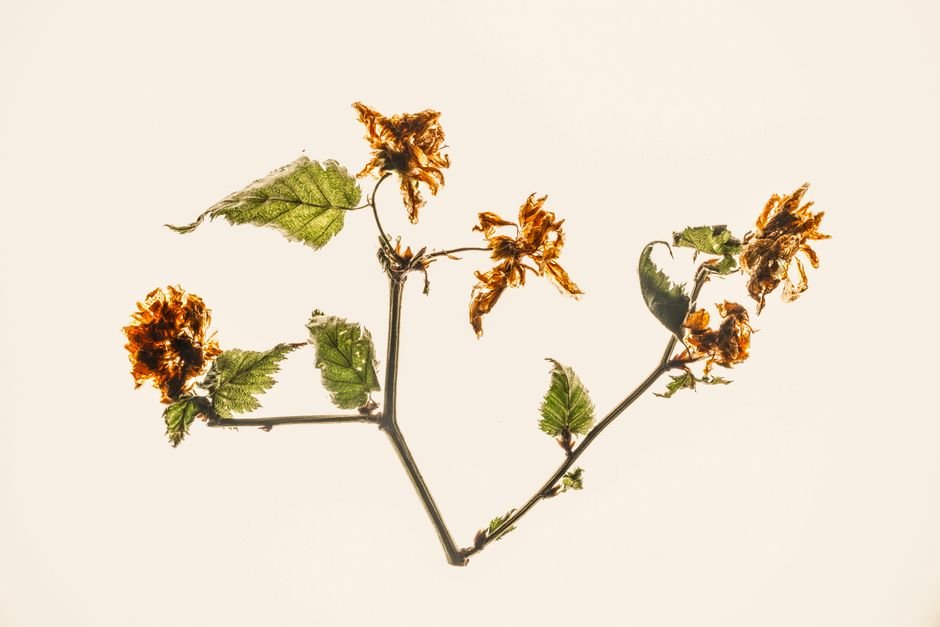
My instinct used to be that once a bunch of flowers started looking tired, that was basically the end of it, and the kindest thing to do was toss them and start fresh. I’ve changed my mind on that over the past year or so, mostly by accident, because a few times I moved a fading arrangement out of the way rather than dealing with it and found it had perked back up somewhere else in the apartment. That was not something I planned. It just kept happening enough times that I started doing it on purpose.
Out of the kitchen window light
My kitchen counter sits under a window that gets strong afternoon sun for a couple of hours, and it’s a great spot for a fresh bunch because I see it constantly, but it is a rough spot for anything already on its way out. Heat and direct light speed up wilting, and a flower that’s already struggling doesn’t have much reserve left to fight that. When something starts drooping, the first thing I do now is just slide it back from the window, or move the whole vase to the hallway table, which gets almost no direct light at all. That single move alone has stretched the life of more than one arrangement by a couple of days.
The bathroom, oddly enough
This one surprised me. My bathroom has no natural light to speak of and stays cooler and more humid than the rest of the apartment, especially after a shower. I started putting fading bunches in there almost as an experiment, mostly because I’d run out of surface space elsewhere, and they consistently held on longer than I expected. I think the humidity helps, since flowers lose moisture through their petals as well as drink it through the stem, and drier air seems to pull that moisture out faster. It’s not a glamorous place to display flowers and I wouldn’t put a fresh bunch in there for guests to see, but for stretching out the last few days of something already fading, it’s become my default move.
Splitting up a dying bunch
Sometimes it isn’t the whole bunch that’s fading evenly. A few stems go first while the rest are still holding up fine, and for a long time I treated the whole vase as one unit, tossing everything once the worst stems started dragging the arrangement down visually. Now I pull the tired stems out individually and either compost them or, if they’ve got a day or two left in them, move them to a small jar somewhere less visible so the healthier stems left in the main vase look better without the weak ones next to them. It’s a small amount of extra effort but it means I’m not throwing away flowers that still have some life left just because they were sitting next to ones that didn’t.
Cooler spots generally win
The pattern across all of this is that cooler, dimmer spots extend things and warm, bright spots shorten them, which seems obvious written out like that but wasn’t obvious to me when I was newer to buying flowers regularly. I used to think a fading flower needed more light and attention, almost like it needed encouragement, and I’d move struggling stems closer to the window thinking the sun would help. It did the opposite every time. Once I stopped trying to nurse things with light and started thinking about temperature instead, fading bunches lasted noticeably longer.
When I stop moving them and let them go
Not everything is worth relocating. If the petals are dropping on their own when I brush past the vase, or the stems have gone soft and slimy near the base even after a fresh cut, moving them around the apartment isn’t going to change the outcome, it’s just delaying a decision I’ve already made. I try to be honest with myself about the difference between a flower that’s genuinely past its point and one that’s just sitting in a bad spot. The test I use now is simple: does it still look decent from a couple of feet away, even if it’s not fresh anymore. If yes, it gets relocated somewhere kinder. If no, it goes in the compost and I stop feeling like I need to rescue it.
Why I bother at all
None of this is about squeezing every last possible hour out of a bunch of flowers for some kind of thriftiness point. It’s more that I buy flowers often enough now that I’ve started noticing which habits genuinely change how long they last and which ones don’t matter at all, and moving fading arrangements out of heat and light turned out to be one of the ones that actually works. It costs nothing and takes about ten seconds, and more often than I expected, it’s the difference between tossing something on day four and still enjoying a smaller, quieter version of it on day six.
The hallway table has become its own kind of holding pen
The hallway table in my apartment has genuinely turned into the place where fading arrangements go for their last couple of days. It’s out of the way, dim, and cool enough compared to the rest of the flat that I’ve started thinking of it as a specific stage in a flower’s life rather than just a random surface. Guests never see it, which used to feel like a downside, but now I think of it as the opposite of wasted space. It’s doing useful work I wouldn’t get from a spot that just sits empty most of the week.
Why I was wrong to think this was fussy
When I first started doing this I worried it made me seem overly precious about flowers I’d spent very little money on, moving cheap grocery store bunches around the apartment like they were something delicate and important. I’ve come around on that. It’s not really about the flowers being precious, it’s that I’m already paying for them and already have them in the apartment, so a free thirty second relocation that gets me two more decent looking days feels like simple math rather than fussiness. I don’t move fresh flowers around trying to optimize anything. I only do this once something is already starting to go, which is a much smaller and more practical habit than it probably sounds from the outside.