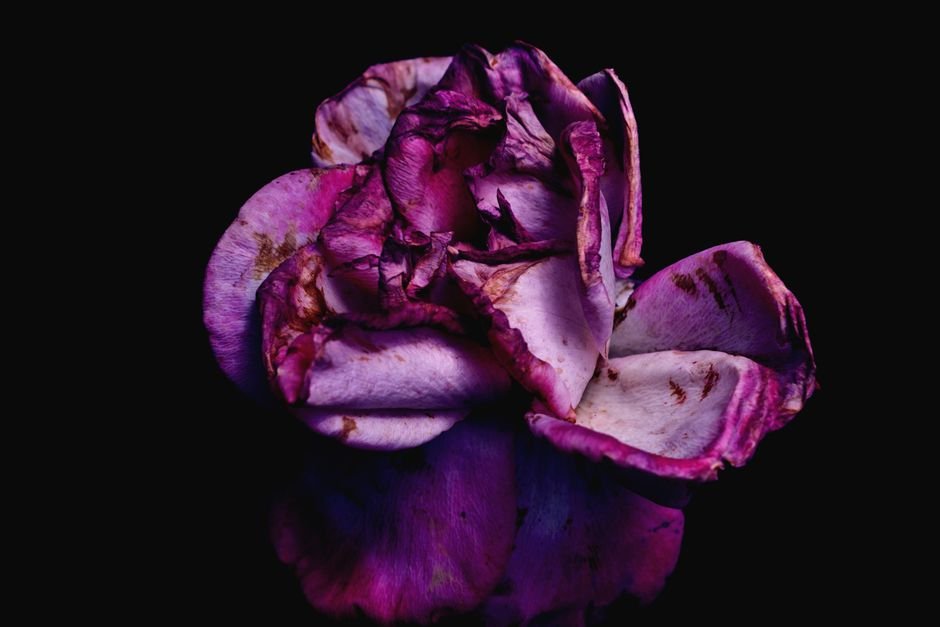
There is a bunch of ranunculus sitting in my kitchen right now that looked completely unbothered on Tuesday and by Thursday morning had gone soft and papery at the edges like it had aged a week overnight. I keep getting fooled by flowers that look sturdy at the shop and turn out to be the opposite once they’re home, and I’ve started paying closer attention to which ones do this so I stop being surprised.
Ranunculus fooled me the most
Ranunculus have a tight, almost waxy looking bloom that reads as tough. The petals are layered and dense and they don’t look like they’d bruise easily. But they are, in my experience, one of the fastest flowers to show their age, especially once they’re fully open. They seem to have a short window where they look their absolute best, maybe two days, and then they start going translucent at the petal edges even if the water is clean and the stems are freshly cut. I’ve learned to buy them when they’re still fairly closed, because an already open ranunculus at the shop is often closer to the end than the beginning.
Hydrangea heads are needier than their size suggests
A hydrangea bloom is enormous compared to most cut flowers, and I assumed for a long time that something that big must be robust. It is not. Hydrangeas seem to drink through the petals almost as much as the stem, and if they go even a little dry they wilt dramatically and all at once, the whole head drooping over the side of the vase like it’s given up entirely. I have revived a drooping hydrangea by submerging the head briefly in a bowl of water, which felt like a strange thing to do to a flower, but it worked more than once. I would not have guessed that trick from looking at the flower itself.
Sweet peas do not wait around
Sweet peas look delicate, so at least in their case the fragility isn’t a surprise, but I underestimated how fast their timeline actually is. Most cut flowers I buy give me five or six decent days. Sweet peas have given me three, sometimes less, and they seem to go from fine to noticeably faded within a single afternoon rather than gradually over a couple of days like other flowers do. If I know I want them for a specific weekend I buy them the day before now, not three days ahead like I do with everything else.
Tulips keep moving after they’re cut
Tulips aren’t fragile in the wilting sense, but they behave in a way that surprised me the first several times I bought them. They keep growing after being cut, bending toward light and stretching taller in the vase over a couple of days, sometimes curving in a direction I didn’t arrange them in at all. I originally thought this meant something was wrong, that they were falling over from weak stems, but it’s just what tulips do. I stopped trying to prop them upright and started letting them lean the way they wanted to, which honestly looks better anyway.
What held up better than expected
On the other side, carnations have consistently outperformed how flimsy they look in a shop bucket next to flashier flowers. They’re often the cheapest bunch on offer and I used to skip past them, but they’ve regularly outlasted more expensive stems in the same vase by several days. Chrysanthemums have done the same. I think their reputation as filler flowers has more to do with how common and inexpensive they are than with any actual weakness, because in terms of staying power they’ve been some of the most reliable things I buy.
What I do differently now
Knowing which flowers are secretly delicate has changed how I plan around them rather than how I treat the water or the stems. I buy the fragile ones closer to when I actually want to enjoy them instead of days in advance, and I put them somewhere I’ll actually see them in their first day or two, because that’s often the peak and it passes quicker than the sturdier stems in the same bunch. I also stopped assuming appearance tells me anything reliable about durability. A tight, waxy, solid looking bloom can be on a two day clock, and a floppy, thin stemmed one can outlast it by a week. The only real way I’ve found to know is to keep buying the same flowers again and again and paying attention to what actually happens, which is a slower way to learn but the only one that’s worked for me.
Anemones surprised me too
I almost left anemones out of this list because I’ve only bought them a handful of times, but each time the pattern has repeated closely enough that I trust it now. They look sturdy, with a dark centre and stiff looking petals, and they hold their shape well right up until they suddenly don’t, dropping petals all at once rather than fading gradually the way a rose does. The first time this happened I actually thought something had knocked the vase, because the petals were scattered on the counter in a way that looked sudden rather than gradual. Nothing had touched it. That’s apparently just how anemones let go, all at once instead of slowly, and now I don’t panic when it happens.
How I’ve adjusted what I buy for which occasion
Once I noticed this pattern of fragile flowers that look tough, it changed which bunches I reach for depending on what I actually need them for. If I want something for a specific date, a dinner or a weekend I know people are coming over, I now avoid the ones I know are on a short and sudden clock, ranunculus and anemones especially, unless I’m buying them the day before. If I just want something on the counter for myself over a stretch of the week with no particular occasion attached, the sturdier looking but actually reliable flowers like carnations make more sense, even though they’re rarely the ones that catch my eye first in the bucket.