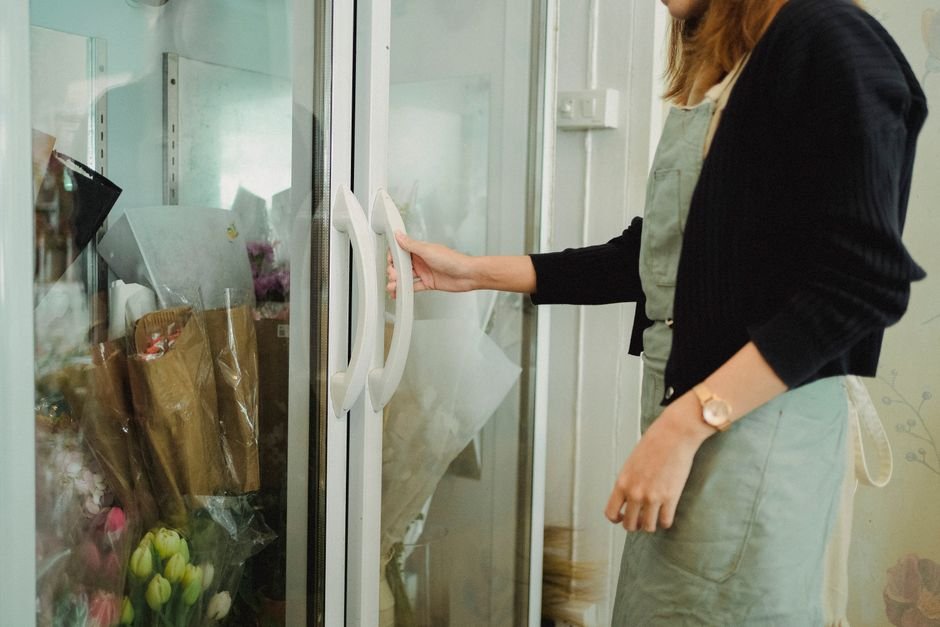
I once wheeled a cart all the way to the checkout with a bunch of grocery store tulips sitting in the child seat, only to turn back at the last second because I finally noticed the rubber band around the stems was cutting into them so tightly that the lower inch had already bruised. That single walk back to the flower cooler taught me more about buying grocery flowers than years of grabbing bunches on autopilot ever did.
The Rubber Band Test
Grocery store bunches almost always come bundled with a tight rubber band or a plastic sleeve, and I check under it before anything else now. I slide two fingers underneath and feel for stems that are pinched or already going soft right at that band line. Because the band sits in one spot for however long the bunch has been sitting in the cooler, that’s often the first place damage shows up, long before it’s visible anywhere else on the plant. If the stems feel bruised or slightly mushy right under the band, I put the bunch back no matter how nice the flowers look above it.
Where It’s Sitting in the Store
I pay attention to where the flower display actually is, not just what’s in it. A bucket sitting under a heat vent or right next to the entrance doors, where the temperature swings every time someone walks in, tends to hold flowers that fade faster once I get them home. I try to pick from the middle of a display rather than the front edge, since the front bunches get handled more, get bumped by carts, and often sit slightly warmer if they’re anywhere near the store’s foot traffic. It’s a small thing, but I’ve noticed a real difference between a bunch pulled from the back of a cooler versus one that was sitting right at the edge closest to the aisle.
Checking the Wrap Itself
The cellophane or paper wrap around a grocery bunch can hide a lot, and I’ve learned to actually open it partway in the store rather than trusting what I can see through the plastic. Condensation built up inside the wrap is a sign the bunch has been sitting sealed for a while, which isn’t automatically bad, but combined with any yellowing leaves it usually means I’m looking at a bunch nearing the end of its shelf time rather than the start of it. I got caught out on this once with a wrapped bunch of alstroemeria that looked perfect through the cellophane. When I unwrapped it at home, half the lower leaves had gone slimy where condensation had been sitting against them for who knows how long.
The Cut Date Isn’t the Whole Story
Some grocery stores stamp a date on the wrap or the band, and while I do glance at it, I don’t treat it as gospel the way I used to. I once bought a bunch with a date that looked recent, assumed it meant the flowers were freshly cut, and was disappointed within two days when they wilted much faster than a bunch I’d bought elsewhere with no date at all. I think the date sometimes refers to when the bunch arrived at the store rather than when it was actually cut, so now I use it as one small piece of information rather than the deciding factor.
A Quick Squeeze Near the Base
Before it goes in my cart, I give the base of the stems a gentle squeeze, the same way I would at the market. Grocery store flowers get handled by a lot of hands before mine, and that handling adds up. If the stems feel at all soft or give too easily under light pressure, I move to a different bunch even if it means picking a less exciting color that day. I would rather bring home a plain white bunch with sturdy stems than a beautiful color that’s already halfway to the compost.
The Time I Ignored My Own Checklist
Even with all these habits in place, I still slip up. A while back I was in a hurry, juggling a full cart and a shopping list on my phone, and grabbed a wrapped bunch of mixed daisies without doing a single one of my usual checks. No rubber band test, no peek inside the wrap, nothing. I got home, unwrapped it, and found that the bunch had clearly been repackaged at some point, since a few of the inner stems were an entirely different age than the outer ones, already limp while the rest still looked reasonable. It wasn’t a disaster, but it was a clear reminder that the checklist only works if I actually use it, even on a day when I’m rushing through a normal grocery run and flowers are the last thing on my list.
Why I Still Buy Grocery Flowers Anyway
None of this is meant to talk anyone out of grocery store bunches, because I buy them constantly and they’re often a genuinely good value once you know what to look for. My kitchen windowsill has held more grocery store bunches than fancier ones over the years, mostly because they’re convenient and I can grab them on a normal errand run without planning a special trip. The checks just take an extra minute, and that minute has saved me from bringing home more than a few bunches that were already on their way out before I’d even paid for them.