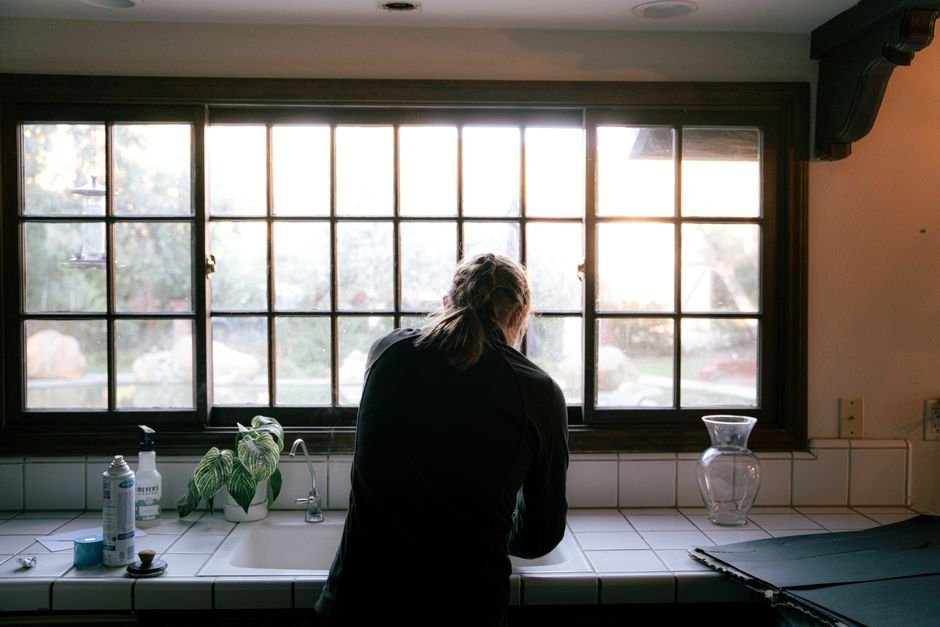
I want to say there was some elegant realization that led me to finally clean my vases properly, but really it was that I held one up to the light while emptying it out and saw a faint ring of grime near the base that no amount of rinsing had ever touched. I’d been using that vase for probably two years, rinsing it with water between bunches and thinking that counted as clean. It did not.
What was actually building up in there
The ring I saw was a thin film, slightly cloudy and a bit slick to the touch, sitting right at the waterline and along the bottom where stems had been sitting. I later learned this is basically residue from plant matter and bacteria that water alone doesn’t fully rinse away, especially once it’s had a chance to dry onto the glass between uses. Every time I filled that vase with fresh water and fresh flowers, I was also filling it with whatever was still clinging to the sides from the last bunch. No wonder some arrangements seemed to go downhill faster than others for no obvious reason. The vase itself was part of the problem, not just the water I was putting in it.
What I actually do now
After every bunch is finished, I wash the vase properly rather than just rinsing it, using dish soap and a bottle brush to actually scrub the inside, especially down near the base where the film tends to collect. I make sure to get right into the bottom corners, since that ring I first noticed was worst exactly there, in the spot a quick rinse under the tap never really reaches. It takes maybe two extra minutes compared to a rinse, which is not a lot of time for something that seems to have made a real difference in how long the next bunch lasts.
The vinegar soak for stubborn buildup
For a vase that’s had cloudy water sitting in it for a few days before I got around to noticing, soap alone doesn’t always shift the film completely. I’ve started doing an occasional soak with a small amount of white vinegar and water left to sit for a while before scrubbing, which loosens whatever’s stuck on there enough that a normal scrub finishes the job. I don’t do this every single time, just for vases that have clearly had a rougher week, or ones I’m pulling out of the cupboard after not using for a while.
I was wrong about narrow vases being fine
I have a couple of narrow necked vases that I genuinely thought were exempt from this whole problem, on the theory that they hold less water and get used up faster so there’s less time for anything to build up. That turned out to be backwards. The narrow shape actually makes them harder to clean properly, since a bottle brush barely fits and a quick rinse just swirls water around without reaching the sides. Those vases, if anything, needed more attention, not less, and I’d been neglecting the ones that needed the most care because I’d assumed their shape protected them.
Drying matters more than I expected
The other habit I picked up is letting vases dry completely upside down on a rack rather than putting them straight back in the cupboard slightly damp. A vase that goes back into a dark cupboard with some moisture still inside seems to be exactly the kind of environment where whatever’s left behind gets a head start before the next bunch even goes in. It’s a small thing, just leaving it out for a few extra hours, but it’s become part of the routine along with the actual scrubbing.
Why this ended up mattering more than fancier tricks
Out of everything I’ve tried for making cut flowers last longer, actually cleaning the vase properly between uses has been one of the more boring sounding changes but one of the more noticeable ones. It’s not as interesting to talk about as a clever trick with a special ingredient, and it doesn’t feel like a discovery, more like admitting I’d been cutting a basic corner for years without realizing it. But a genuinely clean vase, paired with the water changes and stem trims I already do, has meant fewer bunches going cloudy and smelly early, and fewer flowers I’ve had to throw out well before they should have faded on their own.
The vase I finally threw away
Not every vase was salvageable once I started paying attention. I had one, a slightly cheap textured glass one from a shop that’s since closed, that had a rough inner surface I could never fully get a brush into. No matter how long I scrubbed or soaked it, it clouded faster than every other vase I owned, consistently, bunch after bunch. I finally accepted that the shape and texture of that particular vase were working against me no matter what I did, and retired it to hold dry stems instead, which don’t care about any of this. It was a small relief to stop blaming my own routine for a problem that was actually the container.
How this changed the way I shop for vases
Once I understood how much the vase itself mattered, it changed what I look for when buying a new one. I now lean toward simpler shapes with a wider opening and a flatter, more accessible base, specifically because I know I’ll be able to actually clean them properly rather than fighting a narrow neck every single time. It’s a strange thing to consider when buying something meant to look nice on a shelf, function over form in a very literal sense, but after dealing with vases I couldn’t clean well, it’s become a real factor in what I bring home.