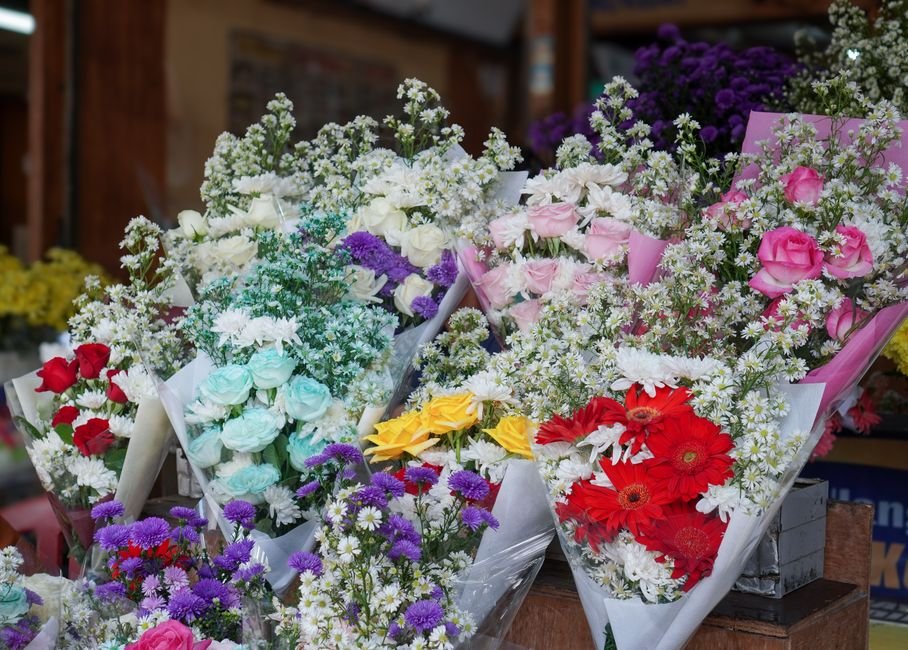
I stood in front of the flower buckets at the market table for so long one Saturday that the vendor finally asked if I was waiting for someone. I wasn’t. I was trying to decide between two bunches of ranunculus that looked almost identical from three feet away, and I have learned the hard way that almost identical is not the same as identical. That kind of standing around, comparing, second guessing, is basically my whole process now, even if it looks a little strange to anyone watching.
The First Once Over
When I walk up to a display of buckets, I don’t grab the first bunch that looks pretty from a distance. I do a quick pass comparing bunches next to each other rather than judging one in isolation. Flowers sitting side by side reveal differences you would never notice if you only looked at one bunch on its own. One might have blooms that are slightly more open, which tells me it will peak sooner than I’d like. Another might still be tight and closed, which usually means more days ahead of me at home on the windowsill. I used to think tighter buds were always the smarter buy, but that isn’t quite true either, since some flowers never open properly once they’ve sat in a bucket too long before I even got there.
Where I Actually Look
I don’t spend much time looking at the flower heads first anymore. I go straight for the stems and the water. If the water in the bucket is cloudy or has any smell to it, that tells me something about how long the whole bucket has been sitting, even if the blooms on top still look fine. I also check the cut ends of the stems whenever I can get a look at them. A stem that has gone soft or slimy near the bottom is a bad sign no matter how good the flower itself looks from above. Leaves matter too, and I check them almost as closely as the petals. If the lower leaves are yellowing or wilting while the top of the plant still looks perky, that mismatch usually means the bunch is older than the display wants you to believe.
The Bunch I Almost Always Skip
I’ve stopped buying the bunch that’s priced a dollar or two cheaper than the ones sitting right next to it, unless I can see an obvious reason for the price, like a smaller bunch or a plainer variety. More often than not, a bunch marked down among full price ones is being moved along because it’s a few days past its best. I fell for this exact thing once with a bunch of stock that looked like a genuine bargain, and by the time I got it home and into a vase, half of it had gone limp within a day. The flowers on top had looked totally normal at the market. It was only once I had them in good light at home that I noticed the stems were already bending under their own weight.
A Mistake I Keep Repeating
Even after all this, I still occasionally buy with my eyes instead of my instincts, especially with anything in a color I love. There was a bunch in a deep coral tone that I practically reached for without doing my usual check at all. I didn’t look at the stems, I didn’t check the leaves, I just grabbed it because the color matched a mood I was in that particular day. It didn’t make it four days on the counter. That one still bothers me a little because I know better and did it anyway, and it’s a reminder that even a routine I trust can get skipped the moment something catches my eye and my guard drops.
What the Stems Tell Me
If I pick up a bunch, I like to press gently near the base of the stems, feeling for firmness. A stem that gives too easily or feels mushy is one that’s already breaking down inside, even if nothing looks wrong above it yet. I also give the bunch a very light shake, nothing aggressive, just enough to see if any petals drop loose. Fresh flowers hold onto their petals under a gentle shake. If even one or two fall with barely any movement, that bunch has less time left in it than a firmer one sitting one bucket over.
Timing Matters More Than I Realized
I’ve also started paying attention to when I shop, not just what I’m looking at once I’m there. Buckets that were freshly restocked a couple of hours earlier behave very differently from buckets that have been sitting under the same lights since the store opened. If I go later in the day, I try to ask whether anything new has come in, since a newer bucket that hasn’t been picked over yet usually has better options left in it than one that’s had shoppers pulling the best stems out of it all morning. I didn’t think this mattered until I compared two bunches bought on the same day, one first thing in the morning and one bought in the late afternoon from the same variety. The morning bunch outlasted the afternoon one by nearly three days, which was a bigger gap than I expected from timing alone. Now, if I have any flexibility in my schedule, I try to shop earlier rather than later, and if I can’t, I’m more careful about digging past the front of the display rather than accepting whatever is easiest to grab.
My Actual Rule Now
These days my rule is fairly boring but it works more often than not. I compare at least two bunches of the same flower before deciding anything, I check the water and the stem ends before I even look properly at the blooms, and I ignore anything discounted unless I can see exactly why it’s cheaper. It’s not a glamorous system and it doesn’t make for a great story most weeks. It’s mostly just slowing down for an extra thirty seconds before I commit, something I skipped for years and paid for more than once in vases of flowers that didn’t make it past Tuesday, sitting sadly on the kitchen windowsill where I most wanted them to last.