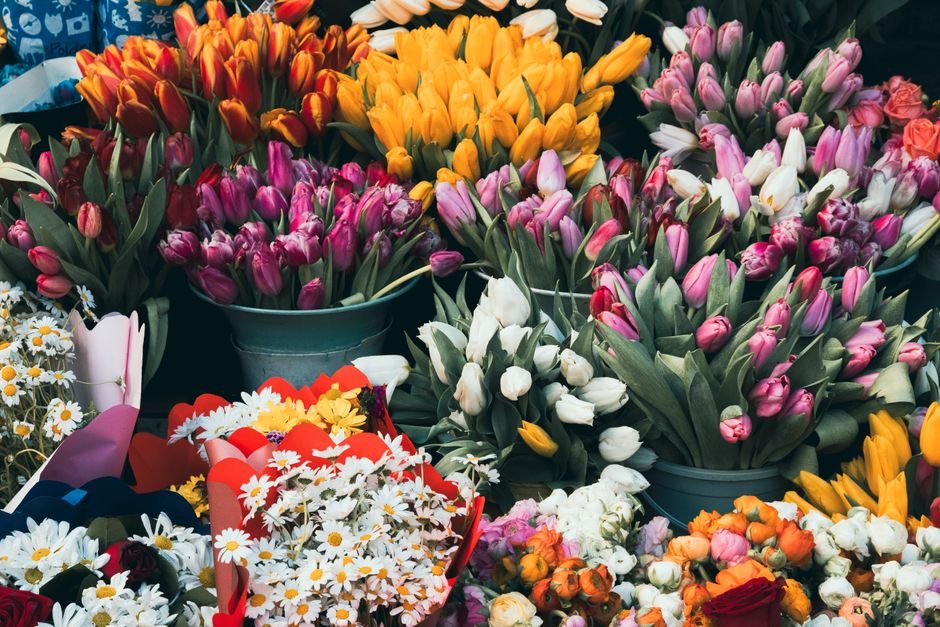
The stand near the corner had four buckets of ranunculus out on a Tuesday in early spring, and I stood there for a full minute just staring at them, because for years I had walked past that same spot without registering that cut flowers change with the calendar the way vegetables do. I had always assumed a flower stand was just a flower stand: roses most of the year, something pink in spring, something orange in autumn. I never once stopped to ask why the buckets looked different from one week to the next, and honestly, if you had pressed me on it, I would have insisted nothing much changed at all, that a flower stand simply refilled itself with more of the same each week without any real logic behind it.
What I thought spring meant, before I paid attention
If you had asked me a couple of years ago what “spring flowers” meant, I would have said tulips, maybe daffodils, and left it there. That was the whole picture in my head. I bought tulips in March because that felt like the correct thing to do, the way you buy a certain kind of squash in autumn because it feels seasonal, without actually knowing whether it was in its best window or its last one. I was going through the motions of seasonal buying without any real information behind it, and I did not even notice I was doing it, because nobody had ever pointed it out to me and I had never bothered to ask. Looking back, I think I liked the idea of buying seasonally far more than I actually understood what it meant in practice.
The actual order things showed up in
Once I started noticing, the pattern was much more layered than I expected. Ranunculus and anemones came first, in that papery, almost crumpled stage before they open. Tulips followed a couple of weeks later, and stayed around longer than I thought they would. Then, toward the tail end of spring, I started seeing the first sweet peas, which I had always filed under “summer” in my head. Nothing arrived on the tidy monthly schedule I had imagined. It moved in overlapping waves, with things quietly starting and quietly finishing while I wasn’t looking closely enough to notice, and once I saw that pattern I could not stop seeing it every single week after that. It made the whole season feel busier and more layered than the flat picture I had been carrying around in my head for years.
The week I got the timing wrong
I made a genuine mistake with this one spring. I had seen peonies at the stand for two weeks running and decided to wait, telling myself I would buy a big armful once I had people over the following weekend. When that weekend came, the peony buckets were gone, replaced by something else entirely, and the person at the stand told me, not unkindly, that the window had basically closed for the year. I remember feeling almost embarrassed, the way you do when you assume something will just wait for you. It did not wait. That was the moment it actually clicked that “seasonal” is not a soft suggestion, it is closer to a deadline, and I have thought about that exchange more times since than I would like to admit. I still think about those peonies sometimes, which is a slightly ridiculous thing to say about a flower I never actually bought.
How short some of these windows really are
Since that mistake, I have paid much closer attention, and what strikes me now is how brief some of these spring windows are compared to what I expected. I assumed most flowers stuck around for a couple of months at least. Some do. Others show up, hold on for what feels like ten days, and then vanish until the following year. It is less like a season with a beginning, middle, and end, and more like a series of short visits, each one worth catching while it is actually happening rather than assuming there will be another chance next week. I now think of spring less as a single long season and more as a string of small deadlines I try not to miss, and I have started treating each new arrival at the stand with a little more urgency than I used to.
How my kitchen windowsill changed through the season
My windowsill vase tracks all of this whether I mean it to or not. Early in spring it held small, tight stems, ranunculus mostly, because that was what looked good and what I could afford in small quantities. By the middle of the season the vase had gotten fuller and looser, tulips leaning at odd angles the way they do after a day or two in water. By the end, I had shifted again without deciding to, buying stems with more movement to them, longer and less formal, because that was simply what was sitting in the buckets when I walked past. The windowsill did not follow my plan. It followed the stand, week after week, and looking back at photos from a single spring is almost like watching a slow, quiet handoff from one flower to the next, one I never would have noticed if I had not started paying attention on purpose.
What I actually watch for now
These days I do not walk in with a fixed idea of what I am buying. I look at what is genuinely fresh that particular week and ask a few quick questions instead of reciting a shopping list from memory. Is this the first week I have seen this flower, or has it clearly been around a while. Does the person working the stand mention that something is almost done for the season. Small clues like that tell me far more than my old habit of assuming tulips equals spring and nothing further needed thinking about. It has made buying flowers feel less like a routine chore and much more like paying attention to something that is genuinely changing under my nose, one short window at a time, and I doubt I will ever go back to shopping the old careless way again, even on the weeks when I am busy and could easily justify not bothering.